How do you stop “blind signing” when you’re moving assets across 90+ EVM chains and interacting with dozens of DeFi contracts a week? That question matters because the attack surface grows combinatorially: more chains, more token approvals, more bridges, more fees, and more places where a single mistaken signature can cascade into loss. Rabby Wallet positions itself as a security‑focused, multi‑chain browser wallet that addresses this exact mechanism — but the important nuance is in how it reduces specific kinds of risk, where it still leaves gaps, and what trade-offs it forces on a DeFi power user.
This explainer walks through the mechanisms Rabby uses (transaction simulation, pre‑transaction scanning, approval revocation, automatic network switching), compares those mechanisms to common alternatives, surfaces the wallet’s known limitations, and gives practical heuristics for when and how a US‑based DeFi active user should consider installing the browser extension or pairing it with a hardware device.
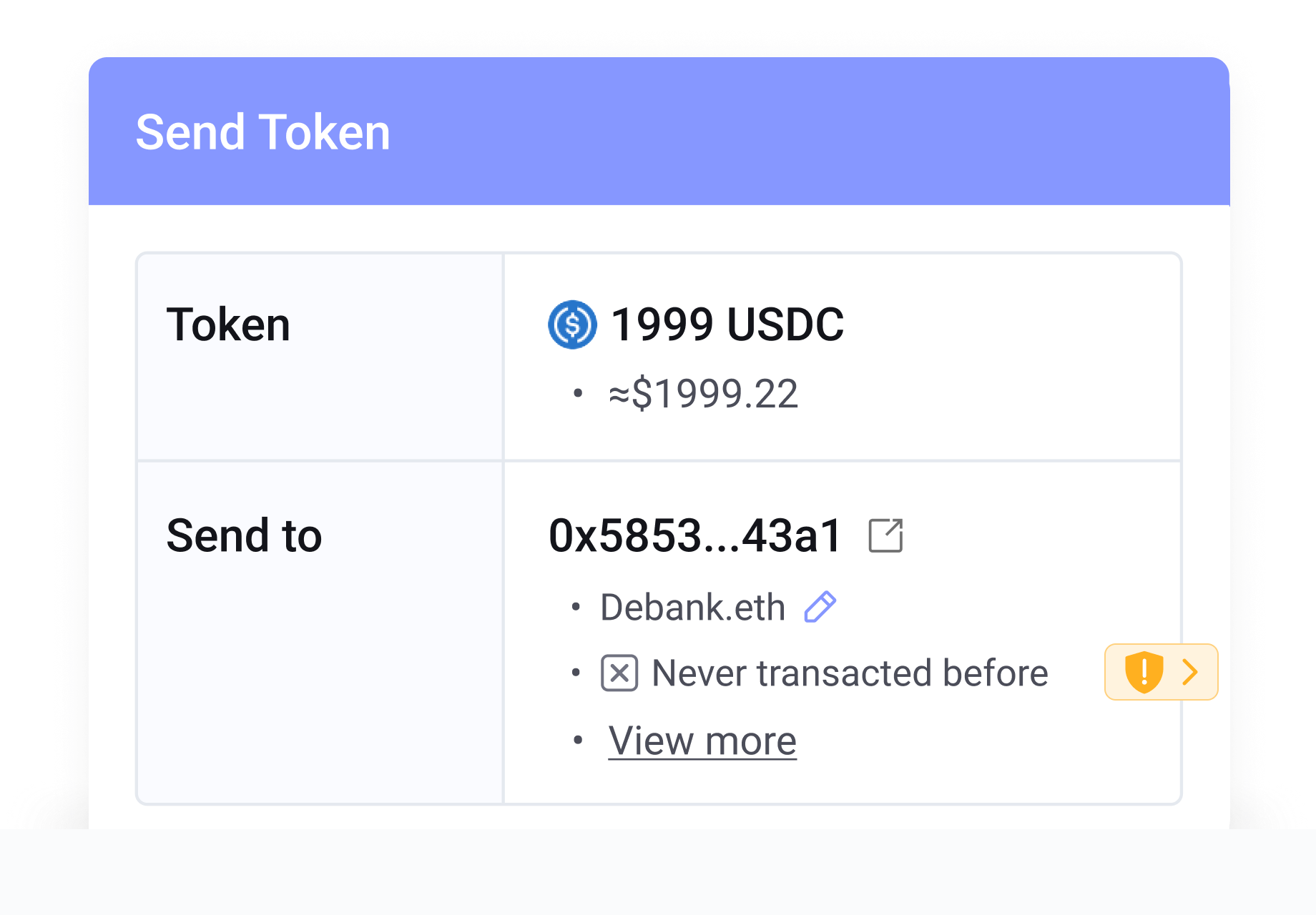
How Rabby’s safety stack works — mechanism by mechanism
At the heart of Rabby’s pitch are three practical mechanisms designed to stop common DeFi failures: pre‑transaction risk scanning, transaction simulation, and built‑in approval revocation. These are not marketing bells and whistles — each one attacks a distinct step in the signing lifecycle.
Pre‑transaction risk scanning runs a set of checks before you sign. Mechanistically this means the extension inspects the destination contract, checks known exploit databases, flags suspicious approval requests, and warns you if the recipient address looks non‑existent or blacklisted. This is pattern‑matching coupled with curated threat intelligence: it reduces the probability of signing an obviously malicious payload but cannot guarantee absence of novel zero‑day contract logic.
Transaction simulation is more interesting from a decision‑making perspective. Before you sign, Rabby runs the intended transaction in an off‑chain simulation that estimates exact balance changes and the fee required. The mechanism converts abstract EVM operations into concrete token deltas you can read. For a DeFi power user, that shifts the mental model from “what does this contract call do?” to “how will my token balances change?” — a useful reduction that catches many accidental approvals, overpriced swaps, and sandwich‑attack exposures. But simulation depends on the accuracy of on‑chain state snapshots and oracle responses; if a dApp’s price oracle is manipulated in the short window between simulation and block inclusion, the simulation can be out of date.
Approval revocation tackles the long tail of risk: instead of constantly juggling token allowances in your head, Rabby gives you a native interface to view and revoke active approvals. Mechanistically, revocation reduces exposure duration: a compromised dApp only drains assets when allowance exists. The trade‑off is friction versus convenience. Power users who revoke aggressively incur more gas and task management; those who keep broad approvals for convenience retain greater risk.
Where Rabby changes the multi‑chain workflow — and where it doesn’t
Automatic network switching is a modest UX innovation with outsized practical gain. Mechanically, the extension detects which chain a dApp expects and flips your active RPC/network so you don’t sign on the wrong chain or pay the wrong asset for gas. This reduces user errors that lead to failed transactions or accidental token losses for beginners and tired power users alike. Compare this to MetaMask where manual network selection remains a frequent source of mistakes.
Rabby supports over 90 EVM chains, and it adds portfolio aggregation across those chains. That matters because you can see positions and recent approvals in one dashboard — a compound reduction of cognitive load. But the wallet is non‑custodial and deliberately excludes built‑in fiat on‑ramps and native staking controls. The practical implication: Rabby is optimized for active DeFi interactions and security hygiene, not for onramping new retail users or auto‑staking yield for passive holders.
Hardware wallet compatibility is a conditional safety multiplier. Pairing Rabby with a Ledger or Trezor moves private keys off the browser and into a signer that only releases signatures for reviewed transactions. That eliminates many attack vectors that target browser extensions, but it does not remove the need for transaction simulation or approval revocation — you still must inspect what the hardware device asks you to sign. In other words, hardware wallets reduce key compromise risk but do not replace semantic understanding of approvals and contract calls.
Trade‑offs and limitations — what Rabby buys you and what it leaves exposed
No single extension can make DeFi risk‑free. Rabby buys you better informed signing and easier allowance management, and it reduces UX errors through automatic network switching. Those are concrete risk reductions. However, the wallet has clear limitations to weigh.
First, Rabby lacks an in‑wallet fiat on‑ramp and native staking flows. For US users who want an all‑in‑one app (buy, stake, and insure inside the wallet), Rabby will feel partial — you must use separate services for fiat conversion and some staking platforms. Second, transaction simulations are only as accurate as the inputs: front‑running, oracle manipulation, or rapid state changes can make the simulated outcome unreliable in flash‑liquidity situations. Third, past incidents matter: a 2022 exploit tied to a Rabby Swap contract cost users roughly $190k; the team froze the contract and compensated users afterward. That response shows operational responsibility, but it also highlights that protocol‑adjacent tooling can inherit smart contract risk.
Finally, there is the human factor. Safety features rely on users actually reading simulations and heeding flags. Power users under time pressure or doing high‑volume swaps may still skip inspection. Because Rabby makes it easier to detect problems, it can reduce reckless errors — but it cannot eliminate social engineering, compromised devices, or deliberate user mistakes.
Where Rabby fits relative to common alternatives
Compare three common choices through a mechanism lens: MetaMask, Coinbase Wallet, and Rabby. MetaMask offers wide adoption and many integrations but leaves network switching and approval hygiene mainly to the user. Coinbase Wallet ties into an institutional ecosystem and fiat rails but is more custodial‑oriented in user experience. Rabby differentiates by integrating pre‑transaction scans and simulations directly into the signing workflow and automating network detection.
So the practical decision rule is: if you prioritize informed signing, granular approval control, automatic network handling, and you’re comfortable using third‑party fiat services, Rabby should be near the top of your shortlist. If you need native fiat on‑ramp, built‑in staking, or a custodial fiat bridge inside the wallet, Rabby will require complementary tools. A common power‑user setup in the US is a hardware wallet (Ledger/Trezor) plugged into Rabby for routine DeFi interactions, plus a separate exchange or on‑ramp for buying crypto.
For more information, visit rabby wallet extension.
If you want to get started quickly as a browser user, the official installation flow is straightforward; you can find the browser extension and follow setup prompts to import an existing seed or create a fresh account. For direct installer links and official guidance, see this rabby wallet extension.
Decision‑useful heuristics for DeFi power users
Use these heuristics when deciding whether to install and adopt Rabby as your daily wallet:
– Pair Rabby with a hardware signer for high‑value accounts. The combination reduces key exfiltration risk while keeping semantic protections (simulations) in place.
– Treat simulation output as a necessary but not sufficient check. If a trade depends on thin liquidity or short‑lived incentives, assume slippage and oracle risk can invalidate the simulation.
– Make periodic sweeps of approvals part of your routine: monthly revocation minimizes dwell time for compromised contracts, but balance the gas cost trade‑off by batching and scheduling revocations.
– Use automatic network switching to reduce human error, but double‑check that the RPC endpoint and chain match the dApp’s expectations on high‑stakes transactions (bridges and cross‑chain swaps are especially sensitive).
FAQ
Does Rabby prevent me from losing funds if I sign a malicious transaction?
No tool can fully prevent loss if you deliberately sign a malicious payload or approve a compromised contract. Rabby lowers the risk by scanning contracts and simulating outcomes, which catches many common mistakes and automated attack patterns. However, novel or well‑crafted malicious contracts, rapid oracle manipulation, and human error remain potential failure modes.
Can I use Rabby with a hardware wallet for extra safety?
Yes. Rabby integrates with Ledger, Trezor, Keystone, and several other hardware devices. The hardware signer keeps private keys offline while Rabby provides the approval and simulation layer — a layered defense that addresses both key compromise and blind‑signing risks.
How does Rabby’s transaction simulation differ from reading raw calldata?
Raw calldata is a low‑level, often opaque representation of contract calls. Rabby’s simulation translates calldata into estimated token balance changes and explicit fee costs, giving you a human‑readable outcome rather than raw machine instructions. This reduces cognitive friction but still requires a baseline understanding of token flows and slippage mechanics.
Are there any features Rabby lacks that I should worry about?
Two practical omissions are: no built‑in fiat on‑ramp and no native staking dashboard for some protocols. For users who want an all‑in‑one consumer flow (buy→stake→earn in one app), Rabby will require complementary services. Also, rely on external due diligence: open‑source code helps audits, but it does not eliminate runtime risks.
What to watch next
Signal trackers for wallet security are straightforward: more extensive, independently published audit results; a track record of responsible, timely incident response; and ongoing improvements to simulation fidelity (for example, better oracle snapshotting or mempool awareness). For US users, regulatory clarity around hosted wallets, on‑ramps, and privacy obligations will also influence whether wallets bundle fiat features or remain focused on DeFi primitives.
In short, Rabby changes the risk calculus for active DeFi users by converting opaque contract calls into actionable, simulated outcomes and by giving you tools to reduce allowance exposure. Those mechanisms substantially lower specific classes of mistakes. But they are not a panacea: pairing Rabby with hardware signers, maintaining careful workflow habits, and accepting the need for external services for fiat and some staking functions are all realistic, decision‑useful steps for a secure multi‑chain DeFi practice.